COO ROLE
The Evolving Role of the COO: Why the
Second-in-Command Is Becoming the
First Driver of Transformation
For years, those of us who sit in the COO chair have joked that there are only two universal truths about the role: there is no standard job description, and every CEO thinks theirs is the exception. You could line up ten COOs from ten companies and you’d find ten wildly different scopes. Some oversee HR, others don’t. Some run IT, software development, product, customer success, procurement, compliance, and everything in between. Others operate more like a Chief of Staff with operational teeth. The variety is staggering - sometimes so wide that COOs wonder whether they have anything in common at all.
And yet, we do. Every COO, regardless of industry or reporting structure, is bound by one core mandate: make the organization run. “Operations” may be broad, ambiguous, and maddeningly fluid, but the responsibility isn’t. Whether the work is digital, physical, global, or hybrid, the COO is accountable for its reliability, scalability, and resilience. That has always been the job. What’s changed - dramatically - is everything around it.
The World Shifted, and the COO Role Shifted With It
Before the 2020s, the job wasn’t exactly a cakewalk, but it was familiar. COOs weathered recessions, tech revolutions, regulatory swings, geopolitical tension, and the Y2K scare. Each new disruption required a recalibration: restructure the footprint, adjust capital allocation, stabilize processes, calm the chaos. These were big challenges, but well within an operator’s wheelhouse.
Then the 2020s arrived and rewrote the script almost overnight. Suddenly, COOs were forced to make sense of compounding social, political, economic, and environmental pressures. The pandemic didn’t just disrupt global operations - it blew open the very definition of work. Supply chains snapped in all directions. Remote and hybrid models became the norm. DEI expectations accelerated. Environmental scrutiny tightened. Labor costs rose. Industry after industry realized that their operational assumptions were built on sand.
The result was a relentless squeeze. The COO had to become the steady hand guiding the organization through a world that no longer behaved predictably. According to a 2023 McKinsey study, 71% of operations leaders said their role changed more in the past five years than in the previous twenty. That is a seismic shift. It reflects an undeniable truth: the COO has become one of the most adaptive, cross-functional leaders in the modern C-suite.
AI Didn’t Just Add to the Workload - It Redefined It
As if that transformation wasn’t enough, artificial intelligence thundered onto the stage. Executives everywhere began scrambling to “get their AI strategy right”, often without knowing what that actually meant. And once again, the question landed on the COO’s desk: How do we deploy AI responsibly? How do we transform our workflows? How do we build the capabilities? How do we ensure our people aren’t left behind?
Within COO Forum, our members’ AI conversations shifted at lightspeed - from curiosity to capability building to enterprise integration. What started as “What tools should we use?” has evolved into “How do we rearchitect the company so we can operate at the speed of AI?”
That shift has placed enormous pressure on COOs to absorb new technical knowledge while simultaneously guiding the organization through its most significant transformation in decades. And it’s not theoretical. A 2024 Deloitte report noted that 62% of companies had already embedded AI into at least one core function, with operations being the second most common area of deployment. In other words, AI isn’t waiting for the COO to get comfortable. It’s already parked on our doorstep.
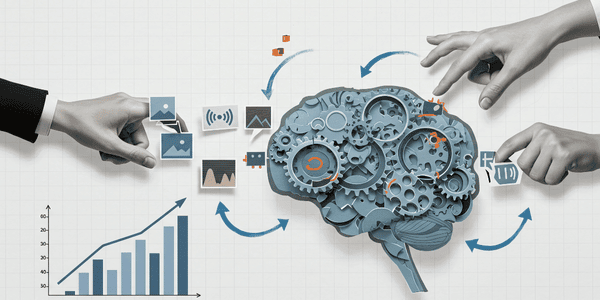
During a recent COO Forum session, Geoff Woods demonstrated how generative AI can be used as a strategic thought partner - not just a content generator. He showed how COOs can test ideas, challenge assumptions, and collaborate with a tool that has effectively read every business strategy ever written. That level of cognitive leverage changes the role in profound ways. It turns the COO into an orchestrator not just of systems and people, but of human-machine intelligence.
The Modern COO: One Role, Dozens of Disciplines
Today’s COO has a toolbox that would have looked ridiculous twenty years ago. In addition to core operators’ instincts - execution, planning, process, and performance - they're expected to lead digital transformation, oversee cybersecurity obligations, track ESG metrics, shape culture, rethink workforce models, and champion cross-functional innovation.
This increased breadth has made the COO a far more strategic figure. COOs now regularly participate in board discussions, investor dialogues, and enterprise-level scenario planning. Spencer Stuart found that nearly half of today’s COOs have backgrounds in strategy or finance, a sharp contrast from the traditional operations-first profile. This blending of disciplines is not an accident; it is a reflection of how the role has evolved into the connective tissue of the organization.
The COO is no longer just the executor of the CEO’s vision. In many cases, the COO is the co-architect.
Where Does the Role Go Next?
With AI accelerating every facet of business, COOs are starting to ask whether the role will eventually split - perhaps birthing a new Chief AI Officer model. And frankly, it’s possible. Some organizations will absolutely elevate an AI leader to the C-suite. Others will fold AI under the COO. A few will hand the responsibility to a forward-leaning CTO. The future won’t be uniform.
But here’s what is certain: the COO will remain at the center of it. Because no leader is better positioned to unify systems, people, technology, and execution under one operational umbrella.
The pace of change isn’t slowing. COOs must continue to learn quickly, adapt quickly, and pivot even faster. But let’s be honest - that’s always been part of the job. The only difference is that the stakes are higher and the change cycles shorter.
COOs used to be the stewards of execution. Today, they are also the visionaries of transformation, the architects of organizational resilience, and the integrators of human and machine potential. The role is more essential - and more complex - than ever before. And for those willing to lean into this evolution, it is also one of the most exciting seats in leadership.